17 November 26
- Ireland is making steady progress in achieving balance sitting 6th in the EU for women on boards, up from 16th in 2018
- Female representation on ISEQ20 boards has risen to 41% up from 18% in 2018
- Progress must now extend to key decision-making roles, such as CEO, where women remain significantly underrepresented
Dublin, 17 November 2026 – The ninth annual report from Balance for Better Business (B4BB), published today, reveals that the majority of Irish business leaders believe gender balanced leadership is key to the future competitiveness of Irish business.
Nearly 3 in 4 industry leaders say that improving gender balance in senior leadership is important to strengthening the long-term competitiveness of Irish business, while 74% believe balanced leadership has a positive business impact. The findings are based on an Ipsos B&A survey of 358 business leaders, commissioned by Balance for Better Business, an initiative of the Department of Enterprise, Tourism and Employment.
While progress is being made on key targets, the research spotlights a key challenge: the priority paradox. This paradox describes the gap between the increased recognition of the importance of balance and the level of sustained action that is being taken by businesses.
Findings reveal that 61% of business leaders say gender balance is not currently a priority, as they navigate a more volatile environment and face a range of challenges from economic uncertainty to disruptive new technologies and skills shortages.
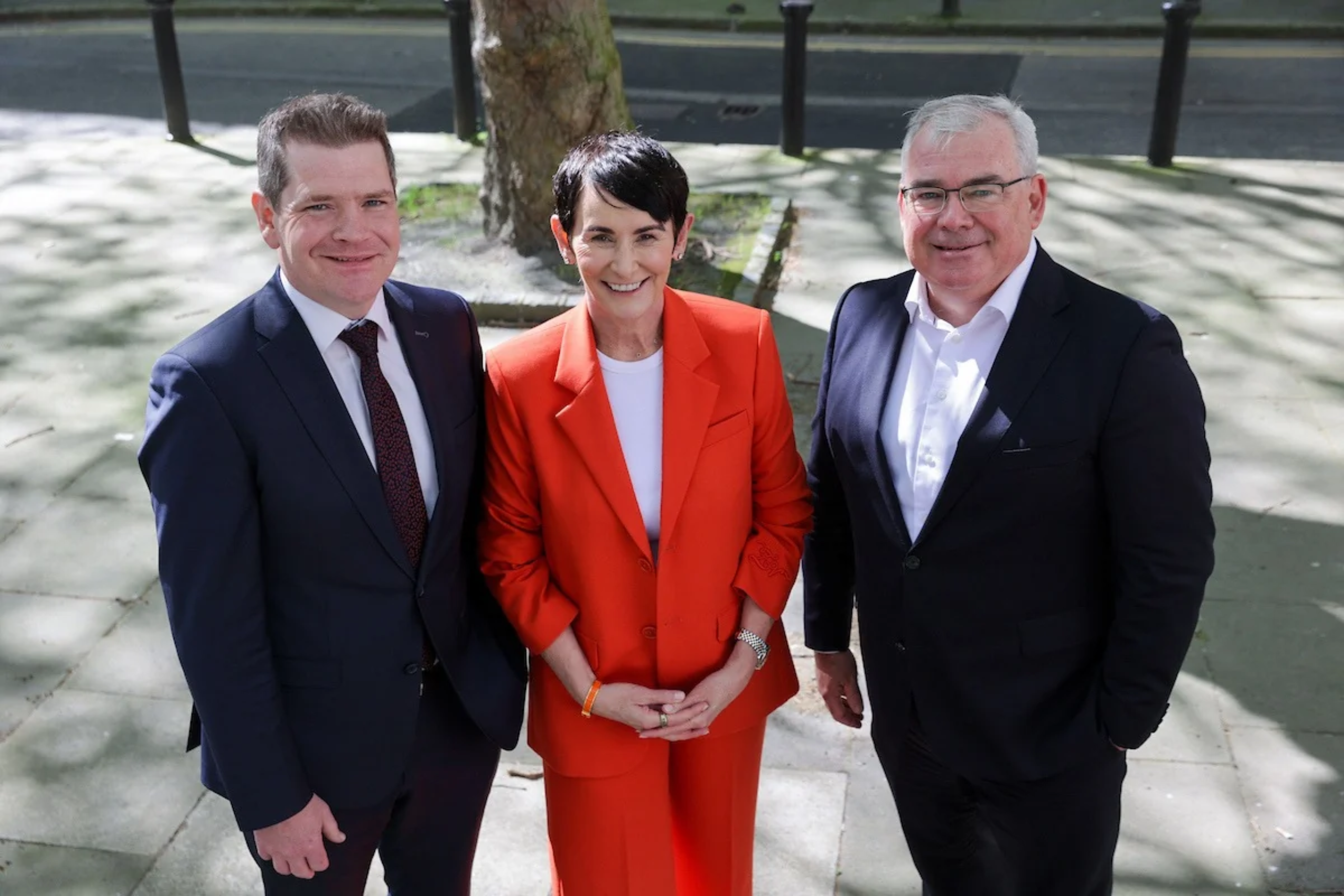
The report was launched by Minister for Enterprise, Tourism and Employment, Peter Burke TD at the Balance for Better Business Summit, a national conversation exploring how Ireland can strengthen its competitiveness through balanced leadership, helping businesses build the capabilities needed to succeed in a rapidly changing economy.
Sustaining progress in Ireland’s boardrooms
The findings show the scale of change achieved in Ireland’s largest listed companies. Women’s representation on ISEQ20 boards has increased from 18% in 2018 to 41% today, with the 40% target which was set in 2024, having been met or exceeded for three successive years. Across all publicly listed companies, women account for 39% of board seats.
Three-quarters of ISEQ20 boards have three or more women, while 12 of the 20 companies have reached or exceeded 40% representation and seven are at or above 50%.
However, the report warns that progress cannot be taken for granted. The proportion of ISEQ20 boards with three or more women has fallen from 80% in 2024 to 75% and there is one all-male board in the ISEQ20 for the first time in three years. Female appointments accounted for 30% of ISEQ20 board appointments this year, compared with 60% in 2024.
While B4BB continues to track the ISEQ20, the relatively small number of companies within the index means that even modest individual company changes can have a significant impact on overall percentages.
Ireland remains strong among European leaders
Ireland continues to hold a strong position internationally on the proportion of women in leadership. Ireland is now ranked joint 6th in the EU for the number of women on the boards of its largest listed companies, compared to 16th when Balance for Better Business was first established in 2018.
Ireland has also jumped from 9th to 6th in the EU for women executives in its largest listed companies. At 27.7%, Ireland is ahead of the EU average of 24.1% and is one of only six EU Member States ranked in the top ten for both female board and executive representation.
Progress deepening across leadership teams
While the progress achieved at board level has yet to be matched within senior leadership teams, this year’s report notes positive movement.
Women’s representation on ISEQ20 leadership teams has reached 27%, up from 26% last year and 17% in 2019. However, this remains below the target of 40%. Across all listed companies, representation has also reached a new high of 27%.
For the first time, more than half (53%) of ISEQ20 leadership teams have three or more women. At the same time, while there are two all-male boards on the ISEQ20 The proportion of all-male ISEQ20 leadership teams has fallen from 20% in 2024 to 11% this year.
However, women remain significantly underrepresented in a number of key decision-making roles. There is no female CEO in Ireland’s publicly listed companies, while women represent 6% of executive directors within the ISEQ20. Of the 13 CFOs who sit on listed company boards, three are women.
Commenting on the launch, Minister for Enterprise, Tourism and Employment Peter Burke TD said: “Irish businesses are operating in a volatile environment, shaped by new technologies, evolving skills needs and wider economic pressures. Against this backdrop, maintaining and strengthening Ireland’s competitiveness has never been more important.
“Gender-balanced leadership has a vital role to play in responding to these shifts. At a time when businesses need to draw on the widest possible pool of talent, experience and perspectives, more balanced leadership can strengthen how companies compete and drive future growth. Ireland’s continued progress at board level shows what can be achieved through sustained focus. The opportunity now is to build on that momentum in senior leadership and key-decision making roles, ensuring Irish companies are well positioned for the opportunities and challenges ahead.”
Balance for Better Business Co-Chair Carolan Lennon said: “The transformation in Ireland’s boardrooms since 2018 is significant. Women have gone from holding fewer than one in five ISEQ20 board seats to more than four in ten, and that level of representation has now been sustained for three consecutive years. We should recognise that progress and the commitment from businesses that has made it possible.
“However, sustaining change requires continued focus. The next opportunity is to strengthen the pipeline beneath the board and ensure more women gain the experience that leads to CEO, CFO and Chair positions. That means thinking about succession earlier, widening access to commercial and operational roles and making sure talented women can continue to progress throughout their careers.”
Balance for Better Business Co-Chair Bernard Byrne added: “Our findings show that Irish business leaders understand the link between balanced leadership and competitiveness. The challenge now is turning that recognition into consistent action across the wider business community.
“It’s clear from our findings that many organisations are still not taking dedicated steps to advance gender balance. The experience of Ireland’s largest listed companies shows that measurement and accountability is crucial to realising meaningful change. As businesses navigate a more volatile world, making a clear plan on leadership pipelines and regularly benchmarking against them needs to be part of their strategy for unlocking future growth.”
For more on the ninth annual Balance for Better Business report, visit: www.betterbalance.ie/.
ENDS/
For media queries contact:
Suzanne Sullivan, Q4 PR: [email protected] / 086 379 7291
Conor Shearman, Q4 PR: [email protected] / 086 059 6082
Notes to Editor
Balance for Better Business (B4BB)
Balance for Better Business (B4BB) is an independent business-led Review Group established by the government in July 2018 to improve and promote gender balance at board and leadership level of Irish business, which in turn will drive better business and societal outcomes.
Biographies
Carolan Lennon is Co-Chair of Balance for Better Business and a Non-Executive Director with more than 25 years’ senior leadership experience across the technology and telecommunications sectors. She previously served as Country Leader for Salesforce Ireland and was the first female CEO of eir, having also held senior leadership roles at Vodafone Ireland. Carolan currently serves on the boards of Salesforce Ireland and Flutter Entertainment.
Bernard Byrne is a former CEO of AIB Group plc and former CEO of J+E Davy. During his tenure at Davy he played a key role in the launch of the firm’s ESG advisory arm, the sale of the organisation, and its subsequent integration into the Bank of Ireland Group. He has been a long serving supporter and a Co-Chair of the Financial services arm of the 30% Club.